





How to Ride a Bike Downhill
July 04, 2011
This may seem to be an unnecessary topic, since one doesn’t even have to pedal when descending a hill. However, some people are afraid of high speeds on a bike, and others don’t know how to descend a winding road quickly and safely.
First, some people believe that bicycles are not safe at high speeds. There are some bikes which are not. If the brakes work poorly, if the spokes are loose, if the hubs lack grease, or if the frame or fork are out of alignment, the bike should not be used at high speeds. In fact, it shouldn’t be ridden at all until repaired.
However, a bicycle that has good brakes and wheels and is properly aligned can easily travel at 50 mph or even faster without any problem. I know because I have traveled that fast down many, many hills on all of my bikes.
There’s even one safety advantage to traveling fast on a bike. As the speed of the bike gets faster, the gyroscopic stability of the wheels gets greater, thus making the bike harder to upset.
Some bikes may become less stable when they reach a certain speed. This indicates a design failure, and any bike that shows such a characteristic should be kept below that speed. None of my bikes has never demonstrated this problem more than very slightly.
A myth that I learned as a child is that high speed will throw all the grease out of the hubs. This is not true.
However, there are real dangers involved in traveling at high speeds. One is that it takes much longer to brake to a stop, another is the danger from holes or gravel, another is the danger from motor vehicles, and the final problem is that of making tight curves, especially if the road is wet.
First, it’s important to recognize that braking distances increase rapidly with speed (especially when the rims are wet!). The brakes on a bike are also not as good as those on a car, so it’s important not to get too close behind cars when descending. Watch ahead and anticipate dangers. When I first started riding a bike as an adult, I used to go down one hill on the college campus at 35 mph in order to climb easily up the other side. One day, a student started across the crosswalk into my path, saw me zooming towards him like a rocket, froze, and then alternated between going left, right, and staying in the middle. Although I could have passed him safely whichever of the three he chose, because he wouldn’t choose, I very nearly burned up my brakepads in stopping for that fool; however, I also recognized that I had been traveling through there too fast, and I quit accelerating down that hill from then on, even though the trip back up was a little harder.
Second, when traveling downhill at high speed, hitting a hole, loose sand and gravel, a slick section of road, or a patch of ice can be very dangerous. One should use caution except on the best roads, and even on the best road, use caution when going around bends. Back in my first years of cycling, I was going around a bend at maximum speed when I discovered loose gravel had been spread on the road. I already knew that turning would cause me to fall, so I braked as hard as I safely could while riding straight. Fortunately, I was on an inside bend and there was a parking area, so I was able to stop safely about 25 feet after leaving the roadway. I have never gone around a blind curve so foolishly again. Always be prepared to stop. On a day with rain or snow, keep speed down on the bends.
Third, one must recognize a greater danger from motor vehicles when moving faster. Although many people cite the slow speed of a bicycle as a reason why bikes shouldn’t be on the roads, the truth is that riding a motorcycle, which moves with the traffic, is more dangerous. When descending at high speeds, keep your distance from motor vehicles. I pass the very slow ones and use my brakes to keep a safe distance behind the ones I can’t pass. Also, since I am moving at the same speed as the traffic, I take the middle of the lane. My worst downhill moment with traffic was in Colorado in 1990. A heavy rain was keeping the road and my brakes wet, and the vehicles were traveling bumper to bumper at my speed (about 45 mph). Each time a car passed, I would have to slow to allow enough braking room between me and it, which would cause the next car to force its way around me. I could not just brake to let the whole line pass, as I needed an entire lane, and there was no shoulder anyway. I was so glad when they had finally inched past me. They really shouldn’t have been traveling so close together in the rain on such a steep downhill.
Finally, there is the problem of tight curves on a downhill, and here we have almost another whole new topic.
The modern roadway climbs straight up the mountain, ignoring local grades, and is difficult to climb and easy to descend. The older roadway follows the terrain up the mountain, steeper in some places, less steep in others, but always winding around. These roads are usually easier to climb, and they are certainly more fun to climb and descend; however, they also require more skill in the descent.
One problem in descending steeply is that the brakes may get too hot. After exiting the Blue Ridge Parkway this last year, I went down an incredibly steep hill, and I was afraid my brakes were going to melt. I was forced to stop several times to let my brakes cool off, as continuing could lead to tire or brake failure, as not only do the brakes and rims get hot, but the tires as well. The old glued-on tires used to come off sometimes because the glue would melt. Modern tires won’t come off, but the brake pads can lose the ability to stop the bike.
Motor vehicles usually are less of a problem to the cyclist on such descents, partially because most motorists use other roads, and partially because a four-wheeled vehicle can’t get around the curves as fast as a two-wheeled vehicle. On my trip to the Smokies in 1965, when descending to Gatlinburg from Newfound Gap, I actually let the vehicles in front get far ahead and then jumped in front of another line of cars, as I didn’t want to ride my brakes all the way down. The following cars couldn’t catch me until we had traveled another ten miles.
In going around a tight curve, your bike will want to lean to the inside, which is just what you want it to do. Apply just a little pressure on the brakes for two reasons: 1) the very mild braking will give you better traction, like gearing down a motor vehicle, and 2) you will be able to brake hard more quickly, should the need arise.
Because the bike is going downhill and thus weight is shifted forward, the front brake works much more efficiently than the rear. One partial solution is to modify your sitting position, pushing your butt back further on the seat. It’s also good to improve the braking position of the hands, if you have drop bars, as the usual positions do not give adequate leverage. On a really steep downhill, I have the brake in a death grip, with my hands on the inside curve of the bar, where I would never hold them otherwise.
Because I am left-handed, I have also reversed my brakes, so my left (more powerful) hand controls the rear brake. I have been warned at bike shops that doing so increases the risk of an accident for anyone stealing my bike, but I have not been alarmed by this suggestion.
It’s important, when unfamiliar with a steep downhill, to travel somewhat cautiously and to hold attempts at speed records for when one is thoroughly familiar with the descent. As downhill descents are a learning experience, only gradually increase your downhill speed as you become more competent.
Source: http://www.kenkifer.com/bikepages/skills/downhill.htm
Tourists and visitors from Manila arrive in Clark Philippines discover the best Italian Restaurant in Pampanga that also offers a large selection of fine vintage wine from Italy in the cellars of Yats Restaurant, the best restaurant in Pampanga frequently visited by food and wine lovers looking to drink and relax in the best restaurant in Clark Pampanga.
Wine and food lovers regard Yats as the best Italian Restaurant in Pampanga, the best restaurant in Clark Pampanga for enjoy authentic Italian cuisine accompanied by fine Italian wine from the wine cellars of this highly recommended Italian Restaurant in Angeles City Clark Pampanga
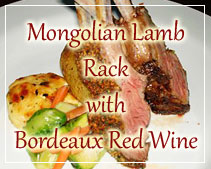
Best restaurant in Angeles City, Clark Philippines adds extra thrill to fine dining in Pampanga by rolling out regional wine dinner featuring the excellent cuisine of France, a set menu that wine lovers travel out of town from Manila can enjoy with fine vintage wines of Bordeaux, Burgundy, Rhone and other wine regions of France available at the famous wine shop Clark Wine Center.
Regional wine dinners are a specialty at fine dining Yats Restaurant and Wine Lounge located near Manila in Pampanga Angeles City Clark Philippines. This top rated restaurant throws special dinner showcasing the cuisine of a selected culinary region and then pair the 4- or 5-course dinner with wines from that region also. These food and wine regions include Bordeaux, Burgundy, Rhone, Loire, Languedoc, Champagne, Tuscany, Piedmont, Spain, Germany, Austria, Czech Republic, California, Australia, New Zealand, South Africa and other major wine producing regions in the world. Classic recipes are revised for these special dinners at this restaurant in Pampanga while wines that are used in the pairing are not available anywhere else in the Philippines. This restaurant in Clark is the only place where special wine dinners can be enjoyed.
For comments, inquiries and reservations click on Click here for inquiry and reservations
Restaurant@Yats-International.com
(045) 599-5600
0922-870-5178
0917-520-4401
Ask for Pedro and Rechel
Getting to this fine dining restaurant of Angeles City Clark Freeport Zone Pampanga Philippines
How to get to this fine-dining restaurant in Clark Philippines? Once you get to Clark Freeport, go straight until you hit Mimosa. After you enter Mimosa, stay on the left on Mimosa Drive, go past the Holiday Inn and Yats Restaurant (green top, independent 1-storey structure) is on your left. Just past the Yats Restaurant is the London Pub.
Yats Restaurant & Wine Bar
Mimosa Drive past Holiday Inn, Mimosa Leisure Estate,
Clark Freeport Zone, Pampanga, Philippines 2023
Manila Sales Office
3003C East Tower, Phil Stock Exchange Center,
Exchange Rd Ortigas Metro Manila, Philippines 1605
(632) 637-5019 0917-520-4393 Rea or Chay
For any assistance in planning and organizing a wedding ceremony, indoor or outdoor garden reception or to find other wedding service providers, Click here to contact us click here
For assistance in hotel and resort bookings in Clark, Pampanga, Philippines, log on to
http://www.HotelClarkPhilippines.com
To buy wine in Manila, Pampanga, Angeles City, Clark or Subic please log on to http://www. ClarkWineCenter.com
To inquire with the highly recommended beach resort hotel in Clark Pampanga visit http://www.ClearwaterPhililippines.com
For more information about Clark, Pampanga, Philippines log on to
http://www.ClarkPhilippines.com